

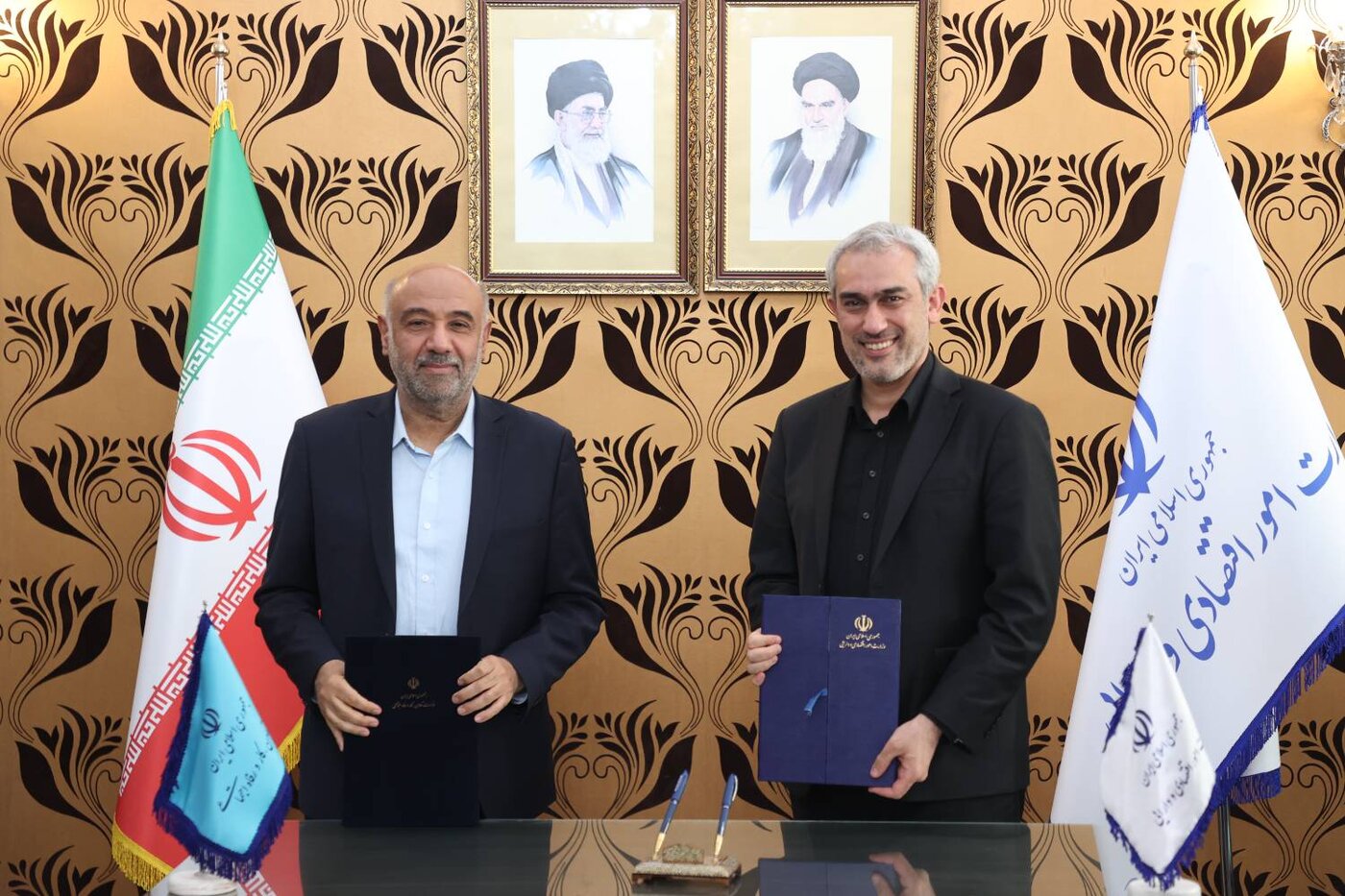
The accord was concluded between the Ministry of Economic Affairs and Finance and the Ministry of Cooperatives, Labor, and Social Welfare on Monday in Tehran.
The Minister of Economy, the Minister of Labor, and the head of the National Tax Administration attended the signing ceremony. Under the agreement, the Vice Presidency for Science and Technology will allocate 1 trillion tomans this year to the Ministry of Labor. The funds will be used to purchase equipment from Iranian knowledge-based companies to upgrade 31 advanced skills centers operated by the Technical and Vocational Training Organization.
This initiative forms part of the implementation of the Seventh Development Plan and the Law on the Surge in Knowledge-Based Production, designed to make the acceptance of tax credits for investor companies more transparent and predictable. According to the agreement, up to 1 trillion tomans of estimated tax liabilities from companies under the Ministry of Labor will be redirected toward equipping advanced skills centers with domestically sourced technology.
Article 2 of the agreement stipulates that tax credits for investments made under Article 99 of the Seventh Development Plan, once approved by the Steering Council for Technologies and Knowledge-Based Production, will be definitively deducted from corporate tax obligations. These deductions may be applied in the year of payment or in subsequent years, up to the end of the Seventh Development Plan’s implementation period.
The agreement outlines several strategic objectives:
Expanding technological infrastructure in vocational and technical training centers
Facilitating joint use of advanced workshops by knowledge-based companies for technology development, including prototyping
Transforming vocational workshops into advanced innovation hubs under the supervision of the Vice Presidency for Science and Technology
Empowering and supplying skilled labor for knowledge-based manufacturing companies
The National Tax Administration has been tasked with ensuring that existing legal frameworks support the acceptance of these tax credits, safeguarding them against potential changes in future regulations.